




Dalberg uses cookies and related technologies to improve the way the site functions. A cookie is a text file that is stored on your device. We use these text files for functionality such as to analyze our traffic or to personalize content. You can easily control how we use cookies on your device by adjusting the settings below, and you may also change those settings at any time by visiting our privacy policy page.
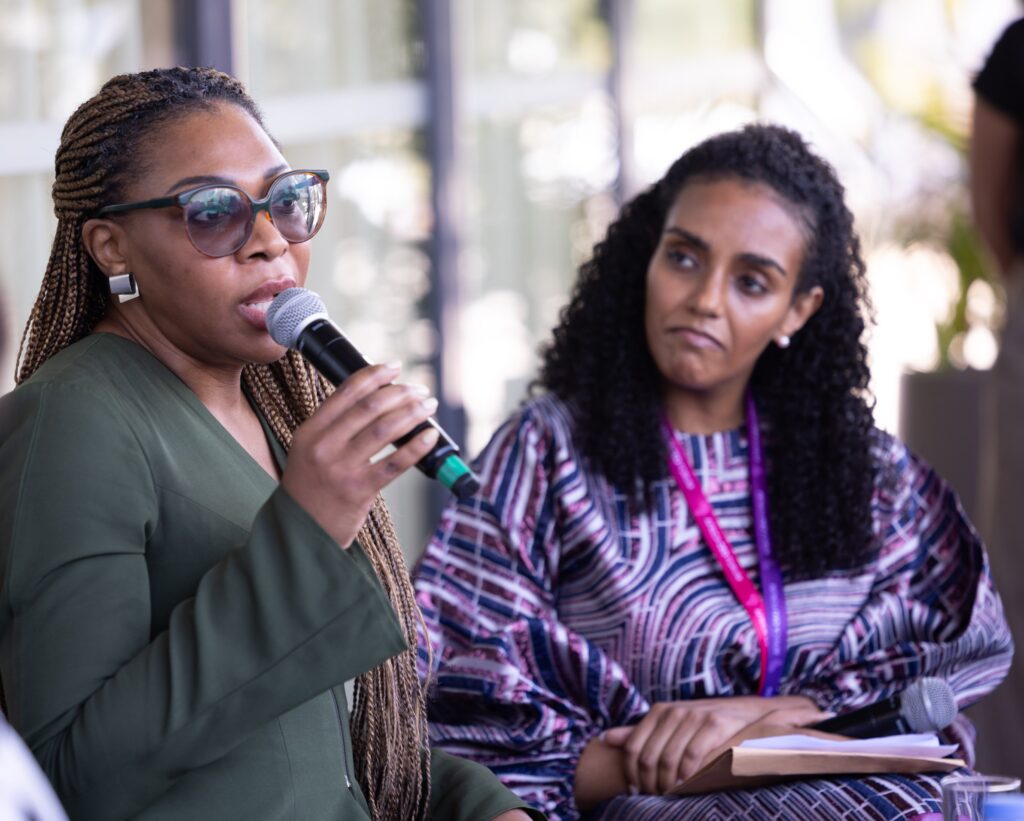
At a closed-door gathering on the sidelines of the Africa CEO Forum in Kigali, the room felt different from many conversations I have moderated on women in leadership. It was not a room asking whether African women are talented enough, ambitious enough, resilient enough, or prepared enough. The women in that room had already answered those questions with their lives and careers.
They had led ministries, institutions, investment platforms, businesses, teams, reforms, and sectors. They had navigated complexity, earned credibility, carried invisible burdens, and made decisions under pressure. They had, in many ways, arrived.
And yet the conversation quickly moved past celebration. The central question was no longer, “How do we get more women into leadership?” That question, while important, is now too small. The harder question is this: why do our systems still narrow as women approach real power?
Africa has made visible progress. Women are present on boards, in cabinets, in executive rooms, in finance, in technology, and in entrepreneurship. But presence is not the same as authority. Representation is not the same as power. A seat is not the same as the ability to shape the agenda, allocate capital, lead consequential work, or decide who comes next.
The next frontier for women’s leadership in Africa goes beyond representation. It is architecture.
For years, we have treated the issue as a pipeline problem. We have created leadership programs, mentorship networks, board-readiness initiatives, and training schemes. Many of these efforts have mattered. But they do not answer the deeper question of how power actually moves.
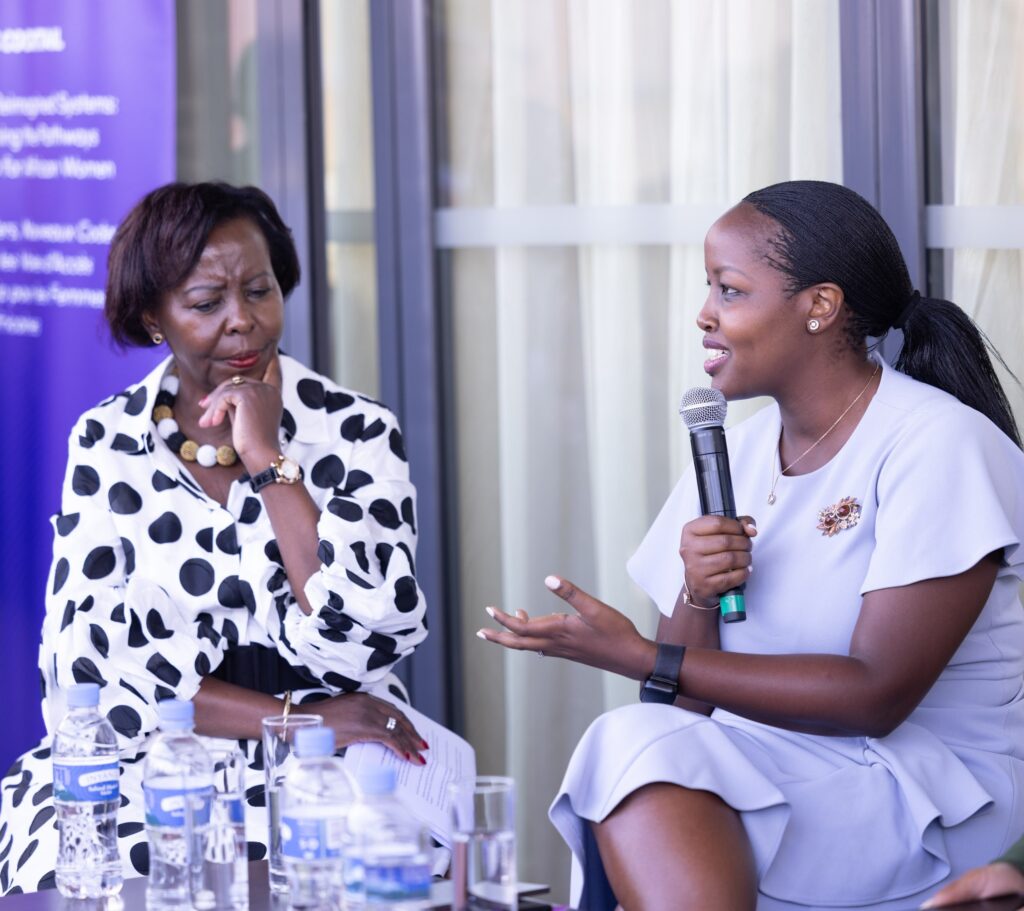
As Louise Mushikiwabo, Secretary-General of the Organisation internationale de la Francophonie (OIF), reminded us, it’s critical to give women concrete access to high-visibility roles with real decision-making power. She pointed to the roles that often determine who rises: finance, operations, digital transformation, infrastructure, and management of large-scale projects. These are not symbolic roles. They are gateway roles. They are where credibility is built, institutional trust is earned, and future CEOs, ministers, board chairs, and investors are formed.
This is why the pipeline narrative is incomplete. The pipeline exists. The problem is how far the system allows it to flow.
Too often, women are encouraged into roles that are visible enough to signal inclusion, but not powerful enough to shape outcomes. They are asked to advise, coordinate, support, manage stakeholders, or carry the human architecture of institutions. But they are less often given the revenue line, the investment mandate, the operational turnaround, the digital transformation agenda, the succession slate, or the authority to make decisions that carry consequence. This is a design flaw.
Rwanda’s Minister of Information and Communications Technology, Paula Ingabire, gave the room another language for this design flaw: trust maps. Formal structures tell us who reports to whom. Trust maps tell us whose ideas move. Two people can offer the same idea, she observed, but one person’s idea is workshopped in private, refined by allies, and carried into the room with momentum. The other person’s idea simply lands differently. The difference is not always merit. It is proximity, credibility, and access to the informal networks where power gathers before decisions are made.
Every institution has these maps. They are rarely written down, but everyone eventually learns they exist. Who gets consulted before the meeting? Whose hesitation slows a decision? Whose name reassures a board? Whose mistake is treated as a learning curve, and whose mistake becomes evidence of unreadiness?
Women are often told to “be strategic” without being given access to the rooms where strategy is really formed. They are told to develop institutional fluency without being given proximity to power. They are told to lead change, then penalized when they trigger the wrong antibodies.
Institutional fluency is a form of power. It is knowing which levers to pull, which fights to take on, how to sequence reform, how to build coalitions, and how to advance change without destroying the very system one is trying to improve. It should not be a hidden code passed quietly through informal networks. It should be made visible, taught deliberately, and shared generously.
The same is true of invisible work.
Every institution depends on people who hold it together. They maintain relationships, protect continuity, anticipate failure, absorb pressure, solve problems before they become public, and keep teams functioning when the formal system falls short. Much of this work is done by women. Much of it is essential. And much of it is unrewarded precisely because it is done well.
We need to name this for what it is. Invisible work is not soft work. It is infrastructure. It is the operating system behind execution.
Yet many institutions reward the visible win and ignore the maintenance that made it possible. They celebrate the person who closes the deal, not the person who kept the coalition intact. They reward the crisis hero, not the continuity architect. They value performance in the room, not the relational labor that made the room possible.
If we do not measure that work, we will continue to exploit it. If we do not reward it, we will continue to drain the women who carry it.
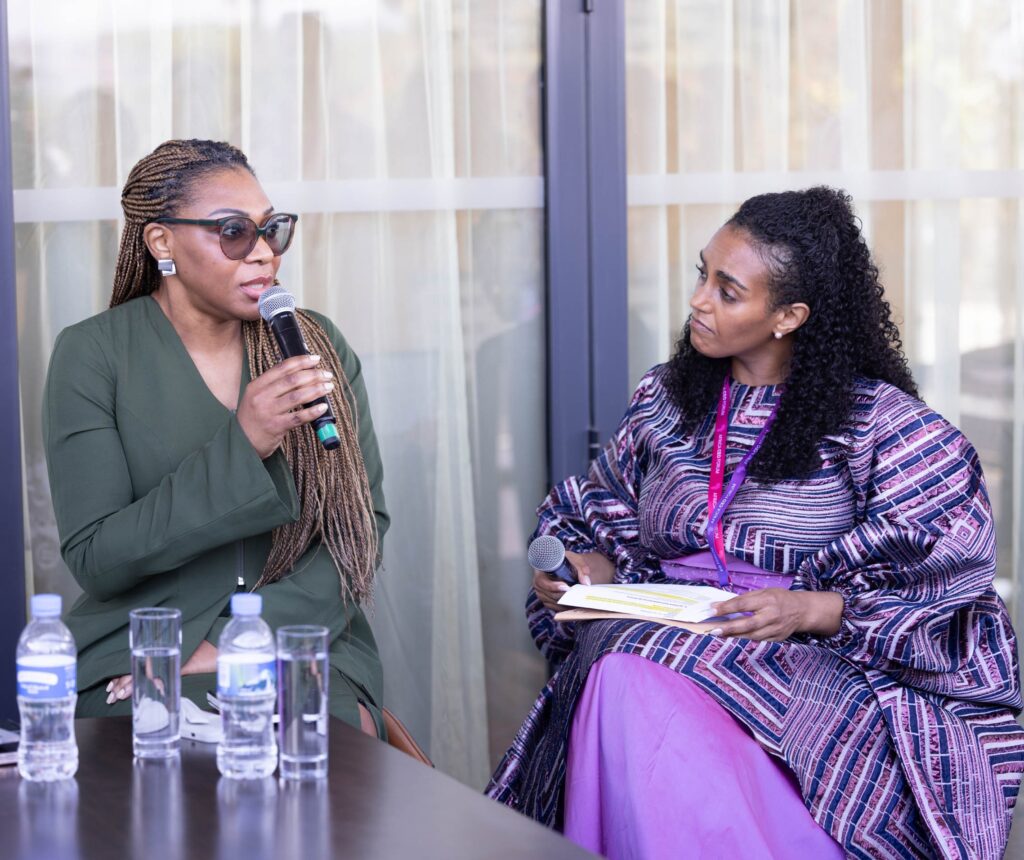
Rachel Moré-Oshodi, CEO of ARM-Harith Infrastructure, pushed the conversation further when she warned us not to confuse presence with power. Women may be in the room. They may even be celebrated for being in the room. But the actual test is what happens once they are there. Do they control budgets? Do they lead deals? Do they sit on investment committees? Do they shape succession decisions? Do they decide where capital flows? Can they say no? Can they sponsor others?
Presence can be counted. Power must be tested.
This matters especially in investment. Rachel noted that women receive only a small share of capital allocations, even where performance on paper is comparable. She also pointed to a sharper truth: when women sit on investment committees, capital moves differently. Representation becomes meaningful when it comes with decision rights.
The same principle applies everywhere. A woman on a board without influence over nominations, strategy, risk, or capital is visible, but constrained. A woman in an executive role without budget authority is present, but dependent. A woman in a public institution without the power to appoint, allocate, or reform is recognized, but not fully empowered.
Does the room change now that women are there?
That is why sponsorship matters more than mentorship. Mentorship opens conversations. Sponsorship opens doors. A mentor gives advice. A sponsor transfers opportunity. A sponsor puts your name on the deal, gives you the stretch assignment, backs you when you are not in the room, introduces you as the lead, and takes reputational risk on your advancement.
Men have advanced this way for generations. Women are too often asked to advance through excellence alone.
Excellence is necessary, but it is not sufficient. Institutions must stop treating sponsorship as personal goodwill and start treating it as leadership infrastructure. CEOs, boards, ministers, investors, and senior executives should be asking: who are we sponsoring, into what roles, with what authority, and with what accountability for results?
There is another responsibility for those who have already arrived. We must tell our stories.
Rachel said it clearly: if we do not tell our stories, we almost do not exist. The next generation cannot walk a path it cannot see. When women break through but do not narrate the path, the knowledge dies with them. The shortcuts, the warnings, the coalitions, the mistakes, the moments of courage, the decisions that changed everything, all of it remains hidden.
And when pathways are hidden, each generation is forced to start again.
Louise offered a powerful example of what it means to use authority once you have it. When she became Secretary General of the Organisation Internationale de la Francophonie, she saw that only two of ten ambassadors were women. Rather than waiting for culture to evolve, she sought the authority to make nominations herself. Once she had it, she appointed qualified women and reached parity. It was not a slogan. It was a decision. One leader, one room, one lever, used deliberately.
That is what system change often looks like. Less dramatic than we imagine, but more courageous than we admit.
So what must change now?
First, institutions must audit gateway roles, not just headcount. Where are women in finance, operations, investment, infrastructure, transformation, and revenue ownership?
Second, boards and CEOs must test whether women have concrete decision rights, not just representation.
Third, investors must ensure women sit where capital is allocated, including investment committees and portfolio decision forums.
Fourth, leaders must make sponsorship visible and accountable. Every senior leader should be responsible for moving women into consequential opportunities.
Fifth, performance systems must recognize invisible work as institutional infrastructure, not informal generosity.
Finally, women who have arrived must make the path visible for those who have not.
The young woman who is not yet in these rooms is not the problem. She is not the pipeline. She is the point. She may be sitting in a classroom, a village, a first job, a family business, a ministry, a start-up, or a team where nobody yet sees what she could become. What she inherits from us should not be a set of scars. It should be a clearer pathway. The goal is to redesign the systems so survival is no longer the price of leadership.