

Dalberg uses cookies and related technologies to improve the way the site functions. A cookie is a text file that is stored on your device. We use these text files for functionality such as to analyze our traffic or to personalize content. You can easily control how we use cookies on your device by adjusting the settings below, and you may also change those settings at any time by visiting our privacy policy page.
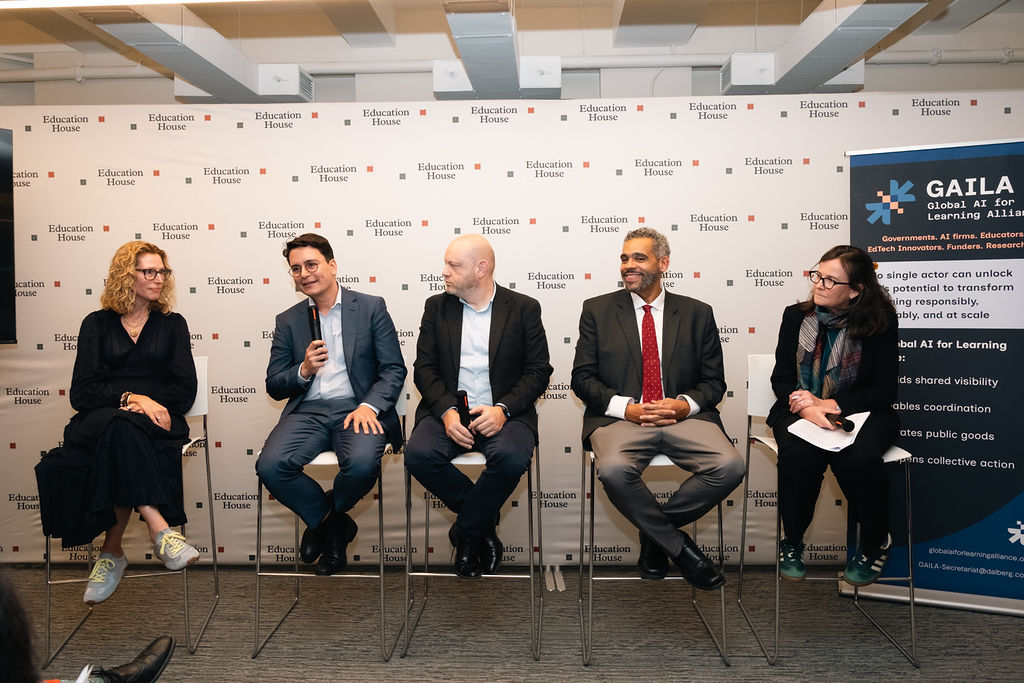
Governments, AI firms, funders and education leaders across the Global AI for Learning Alliance advance a Collective Action Agenda focused on shared public goods for AI and learning.
New York, September 22: The Global AI for Learning Alliance (GAILA) launched the Global AI for Learning Collective Action Agenda alongside the 81st United Nations General Assembly, with governments, AI firms, funders and education leaders across the Alliance advancing collective action around the shared foundations needed for artificial intelligence to improve learning safely, effectively and equitably, particularly in low- and middle-income countries (LMICs).
Since launching at the India AI Impact Summit in February 2026, GAILA has grown to more than 100 endorsing organizations including Anthropic, Google and OpenAI, and the Governments of Kenya, Rwanda and Sierra Leone. Building on the vision established in February, GAILA is now moving into action: building visibility across the sector, coordinating around common gaps, advancing a public-goods lens, and strengthening collaboration and learning across the ecosystem.
Collective action on shared challenges
AI has the potential to improve learning outcomes, support teachers and expand access to quality education. But without intentional design, evidence-based investment, and the readiness of students, teachers and education leaders to use AI well, it could also undermine learning or widen existing inequities. Education systems need stronger public goods such as shared evidence, standards, datasets, evaluation approaches and implementation resources that can be used and adapted across organizations and contexts.
The Collective Action Agenda focuses on five priorities that no single actor can solve alone: child safety and wellbeing standards for AI in learning; model benchmarking and solution evaluation infrastructure; tools to help governments navigate AI solutions; shared research and evidence; and education data and content commons.
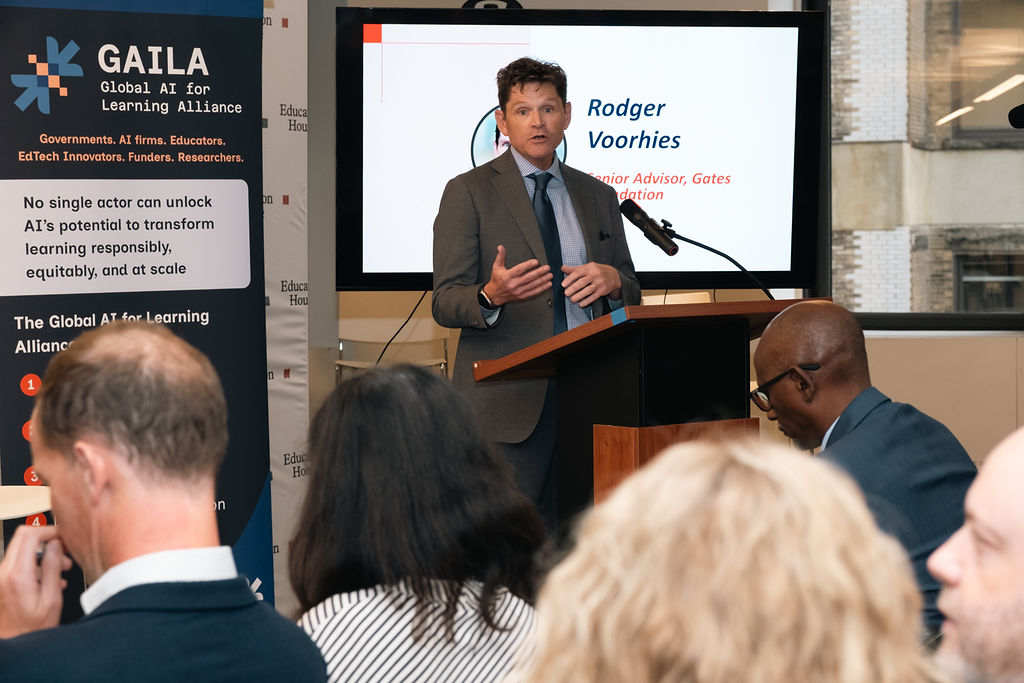
Rodger Voorhies, Senior Advisor at the Gates Foundation, emphasized the value of bringing complementary capabilities together: “We have to align our capabilities and prioritize partnerships to create the public goods that can make AI reliable, affordable and evidence-based for education.”
Joseph Nsengimana, Minister of Education of Rwanda, emphasized that this work must remain grounded in the needs of education systems, noting that it requires “partnership, common standards, and above all, a shared commitment to ensuring that AI serves learners and teachers, not the other way round.”
Building on and contributing back to the commons
Much of the work needed already exists in different parts of the sector. The Collective Action Agenda therefore asks funders and partners to apply a public-goods lens to relevant AI investments in education: building on existing datasets, benchmarks, standards, evaluation methods, implementation guidance and other assets, and contributing back where possible. The aim is for each investment to leave behind useful foundations that allow the next one to start further ahead.
At UNGA, GAILA also previewed its AI in Education Ecosystem Map and Public Goods Library, designed to make existing work easier to find, build on and coordinate around, while surfacing gaps where further investment is needed.
Collective action in practice
At the event, representatives from Google, OpenAI and Anthropic discussed where AI firms can collaborate on challenges, including where shared resources could create value across the wider education ecosystem.
Adam Barton, Global Education, Beneficial Deployments, Anthropic, highlighted the potential for shared resources to reduce repeated effort across the sector: “One way to avoid [reinventing the wheel] is to create common goods — things like shared standards, knowledge graphs and other resources that can power local building — and then enable organizations working alongside teachers to use those goods to create for their own contexts.”
Imaginable Futures, the Gates Foundation, FCDO, Fundação Lemann and UNICEF discussed why a public-goods approach matters in AI and education, and how funding and partnership can help shared resources and infrastructure benefit the wider ecosystem, not just individual projects.
Benjamin Piper, Director of Global Education at the Gates Foundation, pointed to the role funders can play in ensuring useful assets reach beyond the projects that create them: “Foundations also need to double down on the public goods around them. Benchmarks, evaluations, datasets and shared tools are things we need to lean into and support more, so they do not just sit on someone’s laptop but become resources that the broader community can build on.”
The event also highlighted partnerships already applying a public-goods approach in practice: Pratham and Anthropic are packaging components of an AI-enabled assessment system as digital public goods; IDinsight and Anthropic are developing an open-source “AI harness for education” combining curriculum knowledge, evaluation tools and reusable AI capabilities; and Fab AI and Google DeepMind discussed findings from a randomized trial in Sierra Leone showing improved student learning outcomes from integrating Gemini’s Guided Learning into mathematics instruction.
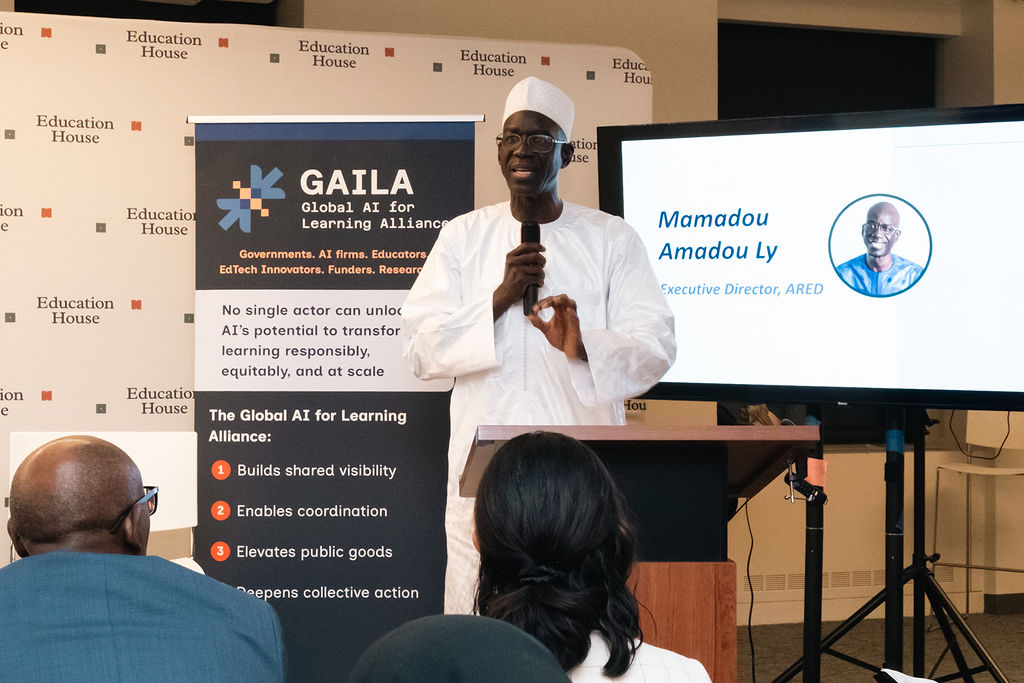
Shared resources also need to work across different languages, pedagogies and contexts. Mamadou Amadou Ly, Executive Director of ARED and 2026 Yidan Prize laureate, reflected on the role of implementers in adapting public goods to local realities and contributing what they learn back to the commons. He closed the session with a reminder that “a resource is only useful if it enables learning — matching the child’s language, the school curriculum and the reality of the classroom.”
From alignment to action
Following UNGA, GAILA will use the Collective Action Agenda to guide its next phase of work, continuing to map the ecosystem and its needs, connect governments and other actors with relevant resources and partners, identify high-potential public goods that can be strengthened or reused, and share learning as this work progresses.
The ambition is to make every investment in AI for learning go further: helping strong approaches travel across contexts, building on the knowledge and solutions held by governments and local actors, and increasing the value each new investment delivers for teachers and learners.
About the Global AI for Learning Alliance
The Global AI for Learning Alliance (GAILA) brings together governments, AI firms, funders, researchers and education organizations to advance safe, effective and equitable AI-enabled learning, particularly in LMICs. GAILA is co-led by UNICEF and partners, with the Secretariat operated by Dalberg and initial support from the Gates Foundation.