



Dalberg uses cookies and related technologies to improve the way the site functions. A cookie is a text file that is stored on your device. We use these text files for functionality such as to analyze our traffic or to personalize content. You can easily control how we use cookies on your device by adjusting the settings below, and you may also change those settings at any time by visiting our privacy policy page.
Today, several financial structures and tools such as SIBs, ILF tools, and blended funds have emerged to bring more private and institutional money into the impact space. But we are still tackling the challenge of scale. These tools are often multiparty arrangements with high structuring costs and do not fit neatly into traditional asset classes. Driving transition remains an exercise in education and advocacy and being more honest about when the economics simply don’t work.”
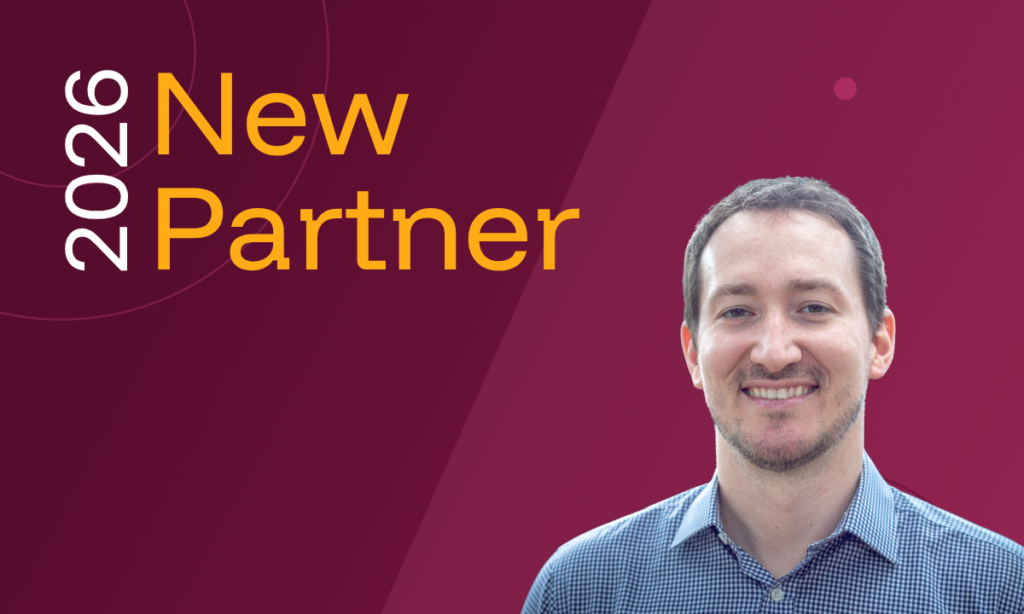
Nick Whalley is a Partner at Dalberg Advisors, based in London, and works across financial services, impact investing, development finance, and technology.
In this conversation, he reflects on the changing development landscape, the growing importance of collaboration across sectors, the evolution of financial inclusion and impact finance, and how technology and AI are reshaping the way institutions can work together to drive positive change.
1. Congratulations on your appointment as Partner. What priorities do you hope to advance in this next chapter?
It’s a very interesting time to be working in impact and development. Declining ODA budgets, AI, geopolitical dislocation (the “development poly-crisis?”) are adding a lot of uncertainty into the space and changing where and how we are needed.
For example, AI has increased the ease of creating and executing scams, so we are working closely with Google.org, Craig Newmark Philanthropies, Vodafone Foundation, and a growing number of other funders, companies, academics, governments and NGOs to stand up an Anti-Scams Collaborative (link here), a template that we are using in a number of other areas. I think this type of collaborative engagement will become more and more critical as technology deepens connections across once-siloed spheres of our lives.
In our financial services work, we once could look at MFIs in isolation. Today, the growing centrality of digital payment systems, data-sharing platforms, digital footprint lending, etc. means the system infrastructure and architecture is more and more critical. To make positive change in this new world requires thoughtful, coordinated action across ecosystem actors.
We are lucky enough at Dalberg to be connected to many different types of players through our work, and I’m quite keen on supporting the necessary collaboration more deliberately in the coming years.
Other emerging areas that I’m interested in include synthetic personas for lower-cost product/intervention testing and applications of AI to enhance government capacity. However, I think much of the most important stuff that remains to be done, and the work that we at Dalberg often think is most under-invested, is the thoughtful, manual work of understanding people’s needs, making sure they are, and feel, heard, and working closely with organizations willing to put the effort in to build solutions that can bring a bit more justice to the world.
2. When working with different stakeholders such as DFIs, impact investors, governments, foundations, and commercial investors, where do you see the biggest disconnects between these actors?
There are many. First, there are things as simple as terminology. We are all, at least subconsciously, aware that cultures develop around sectors of work. When I speak of sustainability, impact, theories of change, etc., there is a community of “impact” people who know exactly what I mean: a lexicon that serves the culture. I’m not one to dismiss this as “jargon”; it has an important function in allowing us to communicate efficiently with one another, but when we need to work across sectors, it poses meaningful challenges.
Second, established frameworks and ways of working: institutional investors, for example, think of different investments as serving very specific roles in a portfolio. Asset classes have distinct functions (inflation hedge, deflation hedge, growth, etc.) in a portfolio that asset managers feel compelled to manage or fit into. Failure to “fit” risks perceived abandonment of fiduciary responsibility. No pleading from impact-focused folks will easily change this, so we need to learn to make the case within these parameters and speak honestly and compellingly about risk-return ratios, correlation with other assets, diligence processes, etc.
Lastly, I’d say coordinated action and transaction costs. Many ideas for how these actors can work together are really creative, but there is too often a lack of clarity on who is, or should be, driving the process, and underestimation of the cost of structuring these things. Coordination challenges are difficult to unpick. At Dalberg, we are practiced at navigating these and playing the role of a driven, objective facilitator, but that doesn’t mean it is easy. Broader familiarity and experience with these tools is needed before private-public-social sector collaboration is the norm.
3. As Dalberg marks 25 years, how has the conversation around finance for development changed? Which ideas have stood the test of time, and which assumptions have fundamentally shifted?
The role of finance in the impact and development space has always been a topic of interest to me. I started my career in investment advisory during the financial crisis and was immediately interested in how financial tools/contracts can have such an outsized influence on how we organize societies, how effective or ineffective we are at getting things done, and the level of inequality we allow. This interest led me to look deeper into Social Impact Bonds at Social Finance, digital peer-to-peer lending at Kiva, and other impact-oriented innovations that were relatively new at the time, and I was keen to play a role in thinking through how they could be deployed for good.
In the financial services space, the hot topic at the time was inclusion, i.e., broadening access. In large part, that discussion today is shifting more towards inclusive design of financial services, depth of use, etc. This is a great development and a very interesting one that has shifted the focus of much of my work in the space to how we build financial services for specific use cases in low-resource contexts. Work we’ve done at Dalberg on thinking through, e.g., AI use cases in financial services has very much focused on this: first, what is feasible in this context; second, does this financial service, as designed, actually meet the needs of the beneficiaries it aims to serve? Agricultural payment use cases, for example, are much different than remittances, standard P2P transfers, etc. So I would say the primary change here has been a deepening of thinking.
In the investment space, a lot of the shift we’ve seen relates to new financial structures and tools that have emerged to solve the very difficult challenge of bringing more private and institutional money into the impact space. Twenty years ago, this was a very underdeveloped space. Today, there are lots of available instruments (e.g., SIBs, ILF tools, blended funds), and lots of ideas, but we are still tackling the challenge of scale. These tools are often multiparty arrangements with high structuring costs and do not fit neatly into traditional asset classes. Driving transition remains an exercise in education and advocacy and being more honest about when the economics simply don’t work.