


Dalberg uses cookies and related technologies to improve the way the site functions. A cookie is a text file that is stored on your device. We use these text files for functionality such as to analyze our traffic or to personalize content. You can easily control how we use cookies on your device by adjusting the settings below, and you may also change those settings at any time by visiting our privacy policy page.

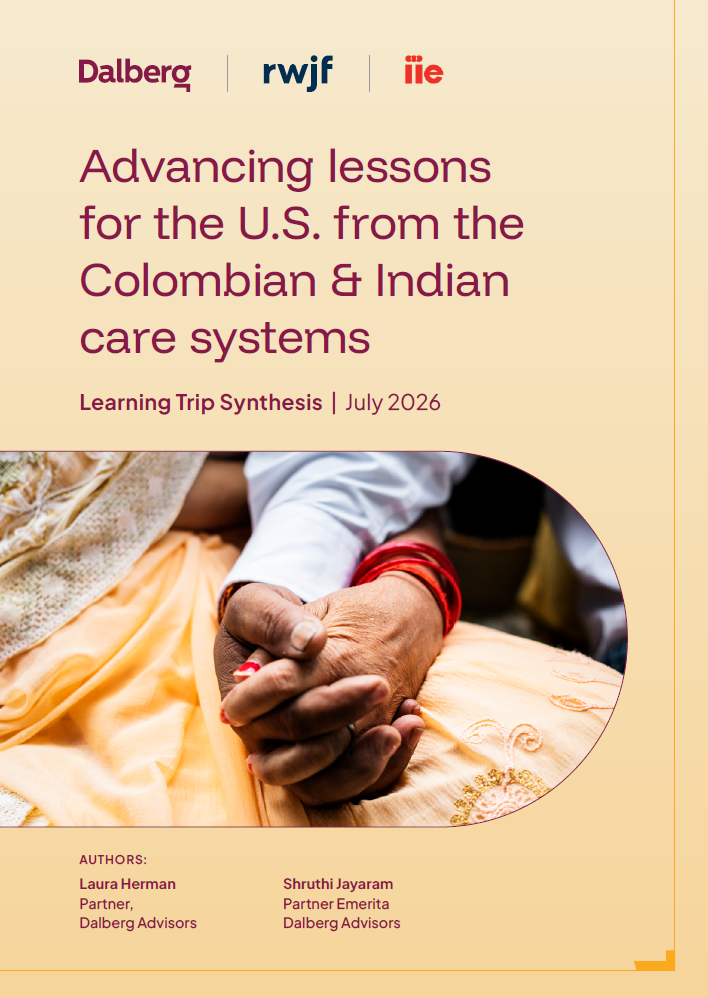
As governments and organizations seek to strengthen childcare, caregiving, and the broader care economy, there is growing interest in understanding how different countries are designing systems that recognize, support, and value care. Colombia and India offer distinct but complementary examples of efforts to embed care within public policy, community institutions, and national development agendas.
Drawing on learning exchanges undertaken by a delegation of U.S. care leaders, this report synthesizes insights from discussions with policymakers, worker organizations, community leaders, researchers, and care providers. Rather than presenting models for replication, it identifies cross-cutting principles that may inform efforts to strengthen care systems in the United States across childcare, elder care, and care for people living with disabilities.
The report was developed by Dalberg with support from the Robert Wood Johnson Foundation and Institute for International Education. It examines shared themes, including care as a public responsibility, cross-sector collaboration, community-led implementation, and investments in care workers, and reflects on their relevance for policymakers, practitioners, advocates, and funders.
Read the full report to learn more.

LAURA HERMAN
Partner, Dalberg Advisors