



Dalberg uses cookies and related technologies to improve the way the site functions. A cookie is a text file that is stored on your device. We use these text files for functionality such as to analyze our traffic or to personalize content. You can easily control how we use cookies on your device by adjusting the settings below, and you may also change those settings at any time by visiting our privacy policy page.

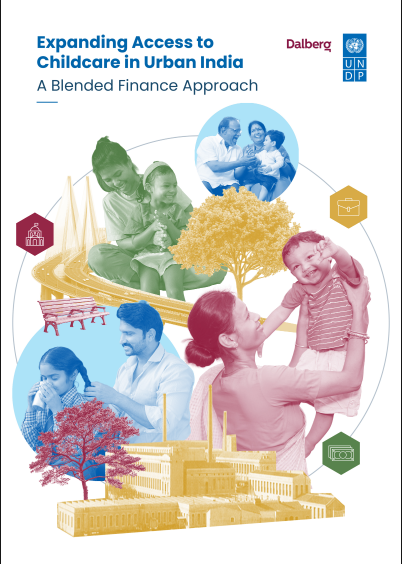
An estimated 6–7 million women in urban low-income households need access to a crèche today, a number that could grow to 20–23 million by 2047 if India meets its female labor force participation targets. India’s public childcare infrastructure, built on a strong foundation through the Integrated Child Development Services scheme, currently meets around 5% of urban demand. Private alternatives, where they exist, remain largely unaffordable for low-income families.
This report, developed jointly by UNDP and Dalberg Advisors, explores how blended finance, combining public funding, philanthropic capital, and private delivery, could help bridge that gap. Drawing on hybrid models from countries across the Global South, it proposes two approaches suited to India’s urban context: hyperlocal community-led crèches operated by women entrepreneurs, and cluster-based centers serving workers in micro and small enterprises near their workplaces. Both models aim to deliver quality childcare at INR 1,200–2,000 per month, with costs shared across government, employers, donors, and families.
Closing the childcare gap will require sustained commitment from the government, philanthropy, private operators, and employers. This report is intended as a starting point for that conversation.
Read the full report to know more.

Swetha Totapally
Partner and Regional Director for Asia-Pacific, Dalberg Advisors