


Dalberg uses cookies and related technologies to improve the way the site functions. A cookie is a text file that is stored on your device. We use these text files for functionality such as to analyze our traffic or to personalize content. You can easily control how we use cookies on your device by adjusting the settings below, and you may also change those settings at any time by visiting our privacy policy page.
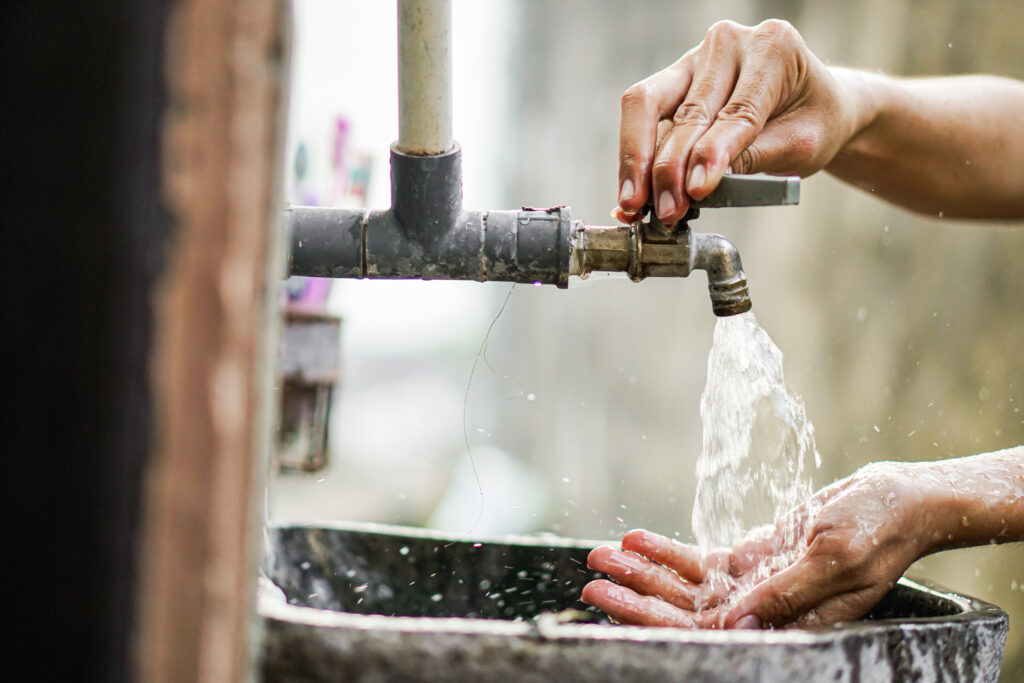
Access to clean water is a basic human right that more than 2 billion people lack. It is fundamental to health and educational outcomes, food security, gender equality, and climate resilience. Yet, billions of people have little access to safe drinking water and sanitation. Large shares of wastewater are untreated, and water-related climate shocks are growing in frequency and intensity. Issues relating to too much water, too little water, or water of inadequate quality are compounding risks that drag down development outcomes, threaten economic growth, and destabilize communities.
So why isn’t progress occurring faster? Because of hidden constraining issues aside from insufficient funding or infrastructure. Weak operations and maintenance, fragmented institutions, insufficient incentives for reliable service, inequitable design that misses marginalized groups, and a persistent pilot trap where promising innovations fail to scale.
This is exactly where philanthropy can be decisive. Large capital-intensive assets such as wells, dams, desalination facilities, or treatment plants tend to be best financed by governments and development finance institutions. Philanthropy’s distinctive power is to fund what others underfund, including capability, innovation-to-scale, inclusive design, evidence, and coordination. This can help unlock the flow of public and private capital, and drive the expected outcomes from effective water-related development.
Below are five high-leverage opportunities for philanthropies to advance access to clean water around the world.
OPPORTUNITY 1: Close the ‘software’ gap so infrastructure delivers reliable water, not just ribbon cuttings
What this means: In many places, water systems—for supplying and treating water for household and commercial use—exist but function unreliably. Pipes leak, pumps break, treatment quality slips, and service is intermittent. The culprit is often not a missing physical asset but missing ‘software’. This means strong institutions, skilled operators, maintenance systems, spare parts supply chains, transparent finances, and clear accountability.
A role for philanthropy: These investments are less visible than new construction and harder to fund through traditional infrastructure channels, yet they often produce the highest returns per dollar because they extend the life and performance of existing assets. The opportunity for philanthropies would therefore include intervention in:
- Utility and service-provider strengthening, including training, performance management, asset registries, and preventive maintenance systems
- Non-revenue water reduction, including leak detection, pressure management, meter management, and incentives for repairs
- Resilience retrofits, including hardening critical assets and contingency planning for droughts, floods, and power outages
- Technical support to local governments to improve planning, budgeting, and procurement
Potential impact: Philanthropic intervention in this space would enable higher service continuity, fewer breakdowns, improved water quality compliance, faster repair times, and lower water losses— especially in contexts with the lowest access.
OPPORTUNITY 2: Make last-mile WASH investable by underwriting viable service models and rewarding outcomes
What this means: Aside from drinking water, sustainable clean water access includes water, sanitation, and hygiene (WASH) services and systems, including those in schools and health facilities. Many WASH solutions struggle because the unit economics are tough—particularly in remote or underserved regions in the world. There are high delivery costs, affordability constraints, and difficulties maintaining service quality over time.
A role for philanthropy: Philanthropy could absorb early-stage risks and pay for outcomes that others will not, turning services that are difficult to fund into models that can scale. This could include:
- Results-based financing that pays providers for verified service delivery and sustained functionality of WASH services, not just installations
- Support for pay-as-you-go and subscription-based models, where appropriate, to stabilize revenues and improve maintenance
- Technical assistance and catalytic grants for local WASH enterprises, utilities, and municipalities to strengthen business plans, pricing, operations and maintenance, and customer acquisition
- Targeted support for high-need groups and places, including informal settlements, rural remote areas, refugee-hosting communities, schools, and clinics
Potential impact: Such intervention would drive reliable services that continue after grants end, as well as the strengthening and scale potential of local providers, and crowding-in of local lenders and public funding. New business models would be strengthened to support some of the most underserved communities.
OPPORTUNITY 3: Push innovation from pilot to scale, including for decentralized and digital water solutions
What this means: There is no shortage of promising technologies, including smart water metering, leak analytics, modular treatment, remote monitoring, and decentralized sanitation. The problem is adoption and scaling. Pilots proliferate, but proven solutions do not spread because procurement is slow, operators lack capacity, costs remain high, and evidence does not translate into buying decisions.
A role for philanthropy: Philanthropy can fund the missing middle between invention and scaled uptake by supporting proof, packaging, and pathways to procurement—as well as the case for replicability across markets and geographies. Allocations could be made to:
- Demonstration and first-of-a-kind deployments with credible operators and long-term support plans
- Evidence generation that matters to buyers, including total cost of ownership, reliability, maintenance needs, and performance under local conditions
- Cost reduction strategies, including local manufacturing partnerships, standardization, certification, and training-of-trainers programs
- Market-shaping accelerators that link innovators to utilities, cities, and ministries, and support procurement readiness
Potential impact: This would help contribute to water development technologies that are not just proven, but purchased, operated, maintained, and replicated at scale.
OPPORTUNITY 4: Finance nature as infrastructure by protecting watersheds, restoring ecosystems, and reducing flood and drought risk
What this means: Healthy ecosystems can act as infrastructure for water access and water management. For instance, wetlands and mangroves reduce flooding. Forested watersheds filter and regulate water flows. Degraded catchments lead to poorer water quality, more sedimentation, and higher treatment costs, while increasing vulnerability to extremes.
A role for philanthropy: Nevertheless, nature-based solutions often sit in a gap. They can feel too environmental for water budgets, too water-focused for conservation budgets, and too long-term for private investors without enabling mechanisms or the ability to support patient capital. Philanthropists can play a catalytic role through:
- Watershed protection and restoration pilots, including reforestation, wetland restoration, erosion control, and recharge protection that can then be handed over to government partners
- Hybrid green-grey projects that combine engineered assets with natural buffers
- Community-led stewardship and enforcement models that protect upstream ecosystems while supporting local livelihoods
- Innovative financing mechanisms, including payments for ecosystem services pilots, outcome-based conservation contracts, and blended vehicles that crowd-in private capital
Potential Impact: Measurable improvements in source-water quality and quantity, reduced flood damages, and financing structures that persist beyond philanthropic funding.
OPPORTUNITY 5: Build the coordination, data, and accountability layer that water-related development and water resources management is missing
What this means: Water outcomes depend on many actors, including innovators, utilities, ministries, municipalities, regulators, basin authorities, community organizations, and private providers. Yet too often, efforts are fragmented. Multiple projects concentrate in the same places, learning is limited across programs, metrics are inconsistent, coordination is limited, and accountability for long-term performance is weak.
A role for philanthropy: Philanthropy is uniquely suited to fund public goods that benefit everyone but are not owned by any single institution, as well as to support partnership building and the convening of actors. Specifically:
- Convenings, coordination platforms, and coalitions that align investments, standards, and priorities across actors
- Open data systems and shared measurement frameworks, including service reliability, affordability, water quality, climate risk, and equity outcomes
- Independent monitoring, evaluation, and learning functions that publish what works and what does not
- Behavior change and inclusive design programs that ensure services are used, trusted, and accessible, especially for women, people with disabilities, and marginalized communities
Potential impact: Less duplication, faster diffusion of proven approaches, stronger accountability for sustained services, and better targeting of scarce capital.
The bottom line
Philanthropy cannot close the global water financing gap alone, but it can make the entire system work better. The most catalytic philanthropic capital funds what others underfund: the operational backbone that keeps water flowing, the business models that sustain last-mile services, the bridge from innovation to adoption, the protection of ecosystems that secure supply and reduce risk, and the data and coordination that turn scattered projects into scalable progress.
If philanthropies allocate capital across these five opportunities, they can multiply the impact of every public dollar and private investment and move the world closer to clean water for all through reliable, equitable services that endure.