




Dalberg uses cookies and related technologies to improve the way the site functions. A cookie is a text file that is stored on your device. We use these text files for functionality such as to analyze our traffic or to personalize content. You can easily control how we use cookies on your device by adjusting the settings below, and you may also change those settings at any time by visiting our privacy policy page.
Advances in technology, in particular AI, ave accelerated financial inclusion—and fraud. What kind of safeguards are needed to protect customers from fraudsters, and earn their trust such that they remain within the system instead of rejecting it?
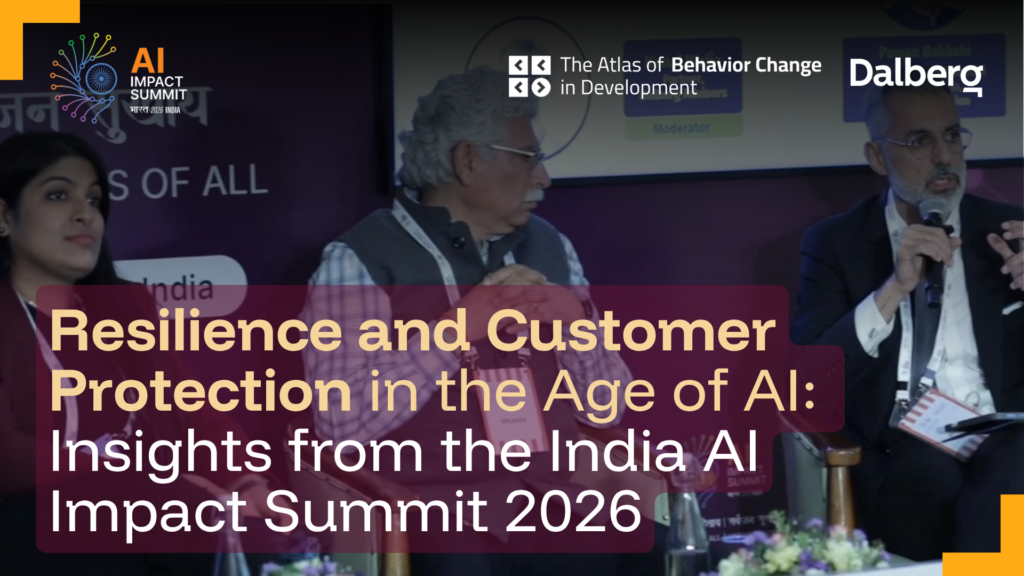
This question was central to discussions we had with leaders and practitioners on the sidelines of the India AI Impact Summit 2026. Nirat Bhatnagar, Founder of The Atlas of Behavior Change in Development and Belongg; Pawan Bakhshi, Ph.D., India Lead, Inclusive Financial Systems India at the Gates Foundation; Shweta Singh, Head of Digital Policy and Strategy at airtel; and Shamina Singh, Founder & President of the Mastercard Center for Inclusive Growth, and EVP, Sustainability at Mastercard, joined Kunal Walia, Partner and AI and Digital Practice Lead at Dalberg to share their perspectives on why trust, behavioral insights, and human-centered design are essential to ensuring AI and digital public infrastructure deliver impact at scale.
Behavioral interventions have been known to significantly reduce fraud and improve digital adoption. Equally important is the role of peer support, as communities build confidence in using digital services and AI. The opportunity now is to embed these interventions into the digital rails, standards, and APIs that underpin public digital infrastructure, so they can be deployed consistently and at scale as a public good.