



Dalberg uses cookies and related technologies to improve the way the site functions. A cookie is a text file that is stored on your device. We use these text files for functionality such as to analyze our traffic or to personalize content. You can easily control how we use cookies on your device by adjusting the settings below, and you may also change those settings at any time by visiting our privacy policy page.
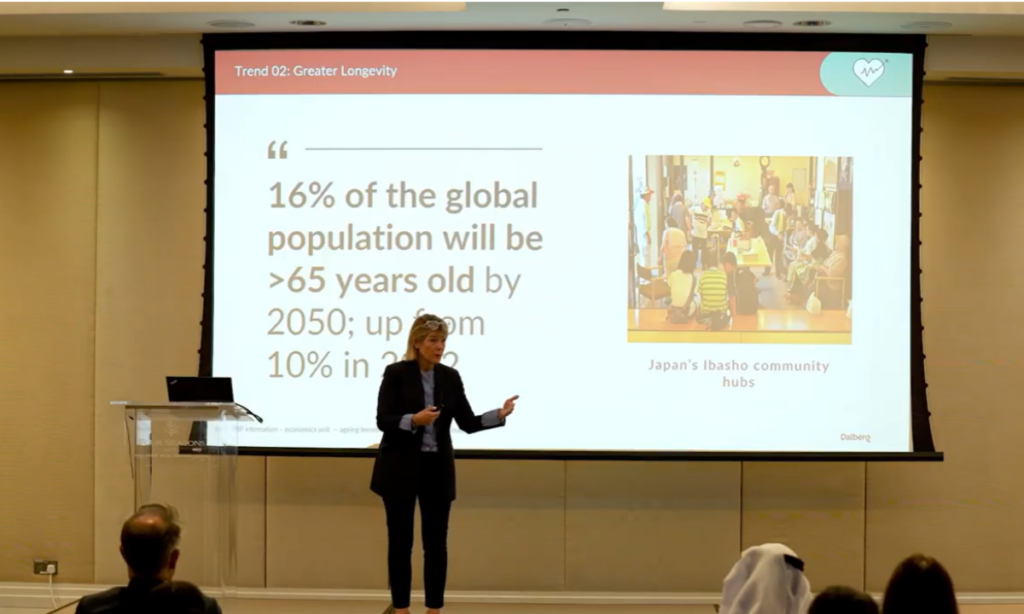
Health equity is a multifaceted challenge, deeply intertwined with economic, social, and environmental issues. Dalberg Advisors Partner Laura Herman explored this critical topic in her recent talk as part of the Knowledge Seminar Series, held in collaboration with the Office of Development Affairs in Abu Dhabi.
Case Studies in Multi-Solving
In Louisville, Kentucky, an innovative experiment tackled the dual challenges of climate change and public health. Low-income neighborhoods lacking tree cover faced higher temperatures due to concrete absorbing heat. The city planted thousands of trees in one such neighborhood, while another served as a control group. Alongside the tree planting, residents were monitored for biomarkers of inflammation linked to diseases. The results were striking—a reduction in biomarkers by 13% to 20% in the tree-filled neighborhood, demonstrating the potential for environmental interventions to improve health outcomes.
Meanwhile, Bogota has an initiative aimed at supporting unpaid caregivers, a disproportionate number of whom are women. Scattered across the city are care blocks or community centres at which women can attend classes that might help them get jobs, attend health seminars, while their children or spouses are cared for. They can even get their laundry done at the care block. The deliver of these services by and for the community brings a strong sense of dignity to the care blocks and a source of pride for supporting the city’s unpaid caregivers.
The examples in Louisville and Bogota reflect investments to address health equity. As Herman explains, health is more influenced more by postal codes than by genetics. The social determinants of health, including economic inequities, access to education, climate conditions and others weigh heavily on one’s long-term health outcomes. And while investments in health care systems are critical for improving care, addressing disparities in the social determinants can have even greater impact on the health outcomes of the most vulnerable populations in our societies.
The Need for Multisolving*
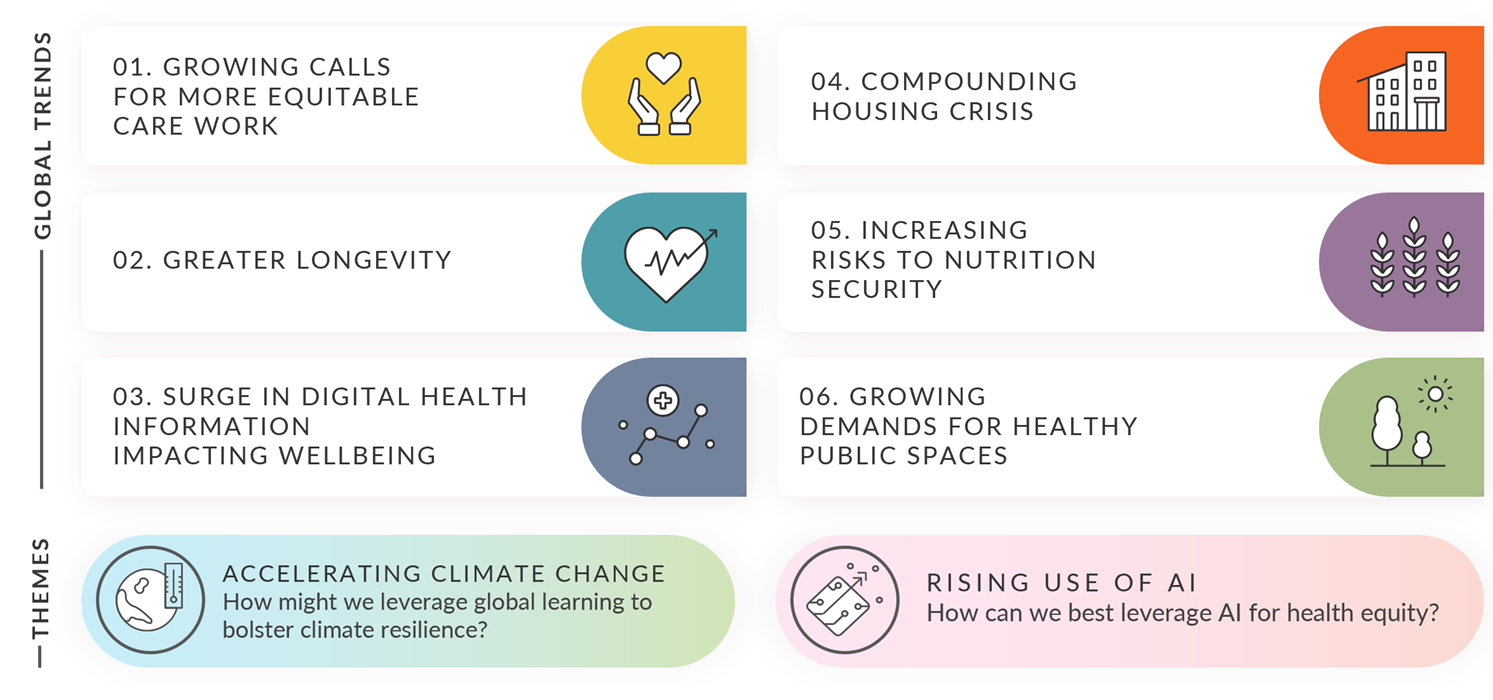
Research supported by the Robert Wood Johnson Foundation, in partnership with Dalberg, has identified six global trends impacting health equity. These include issues like the rise in digital health, housing insecurity, unpaid care work, and poor nutrition. All of the trends are further impacted by the meta themes related to the acceleration of climate change and the rising use of AI in all facets of society. These challenges are incredibly interconnected and call for innovations that cross typical domains and tackle multiple, overlapping problems simultaneously.
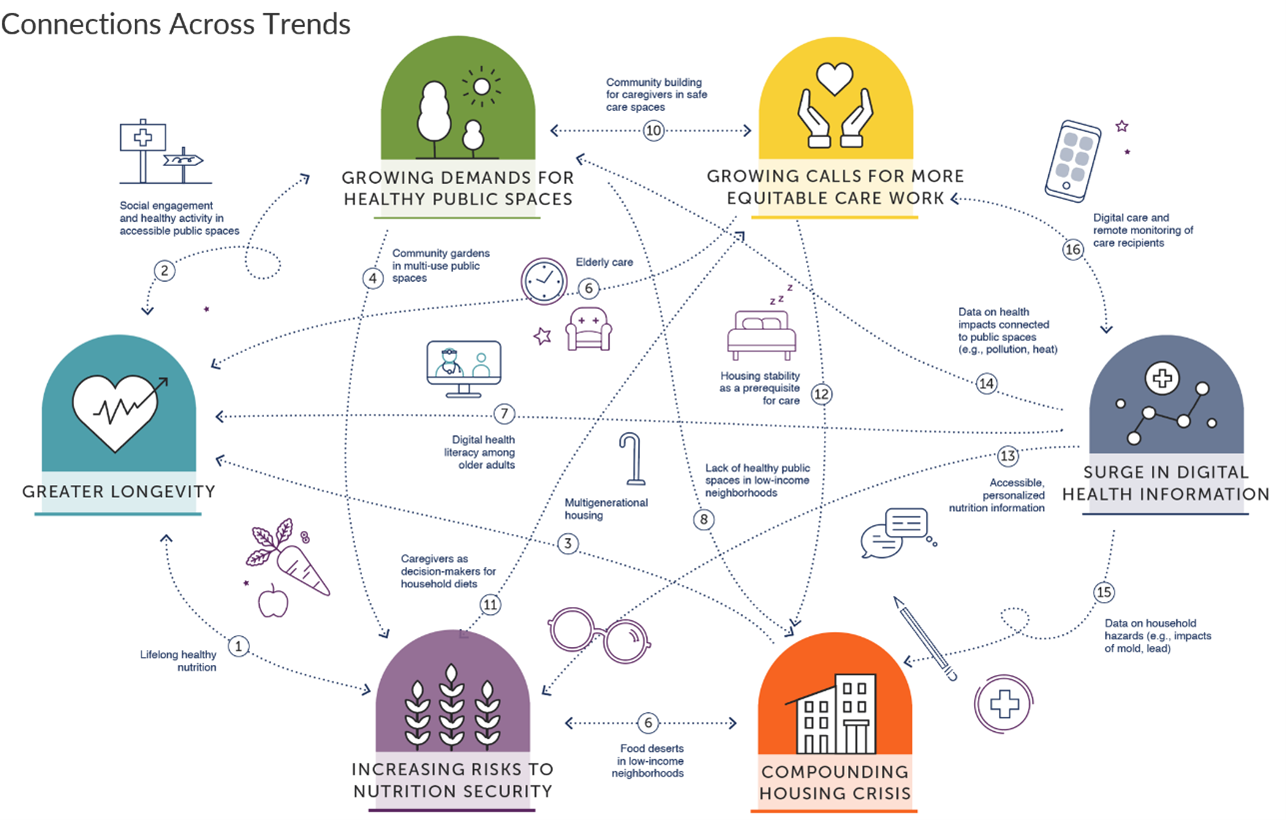
For example, planting trees not only cools urban environments but also improves public health and enhances community well-being. Similarly, educating children about nutrition during school meals fosters healthier habits and addresses food insecurity.
The Path Forward
Achieving health equity requires embracing the complexity of these challenges and designing interventions that address their root causes. Solutions must go beyond traditional silos and focus on the systemic issues driving inequities. By working together, governments, communities and organizations working across various fields can pave the way for more equitable health outcomes worldwide.
Watch the video to learn more about these innovative solutions:
Watch the full version of the video here.
*’Multisolving’ refers to the work of Dr. Elizabeth Sawin and her colleagues at the Multisolving Institute. Multisolving is the idea that a single solution, policy, or investment can address multiple problems across sectors.