


Dalberg uses cookies and related technologies to improve the way the site functions. A cookie is a text file that is stored on your device. We use these text files for functionality such as to analyze our traffic or to personalize content. You can easily control how we use cookies on your device by adjusting the settings below, and you may also change those settings at any time by visiting our privacy policy page.
This World Environment Day, Dalberg is reaffirming our 2020 commitment to join the global effort to limit the rise in temperature to 1.5°C. In our three-part climate commitment, we’ve pledged to apply a climate lens to every project. That means driving climate impact for clients, cutting down on carbon emissions as much as possible, and allocating resources to offset unavoidable emissions.
Every year, we evaluate our progress to ensure that we’re staying true to our goals, and share details of the steps taken to mitigate our carbon and plastic footprint.
Working on reducing our carbon emissions
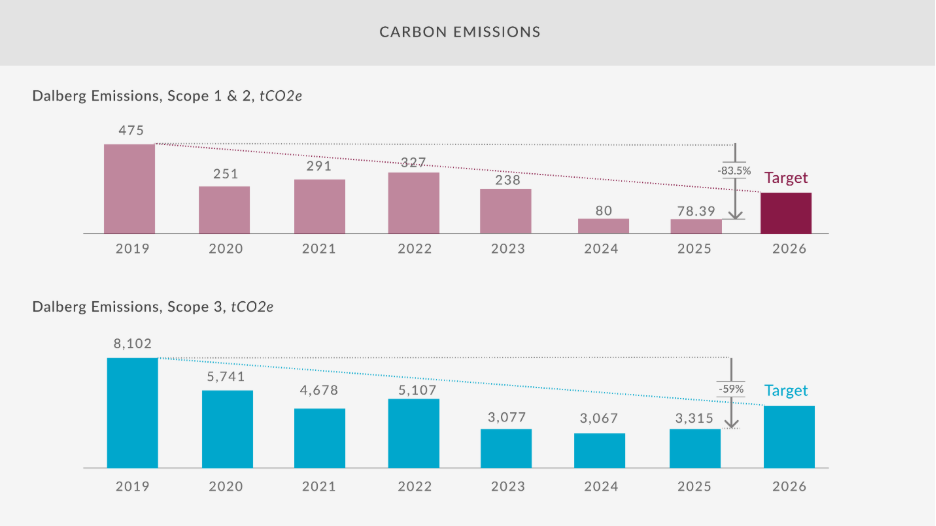
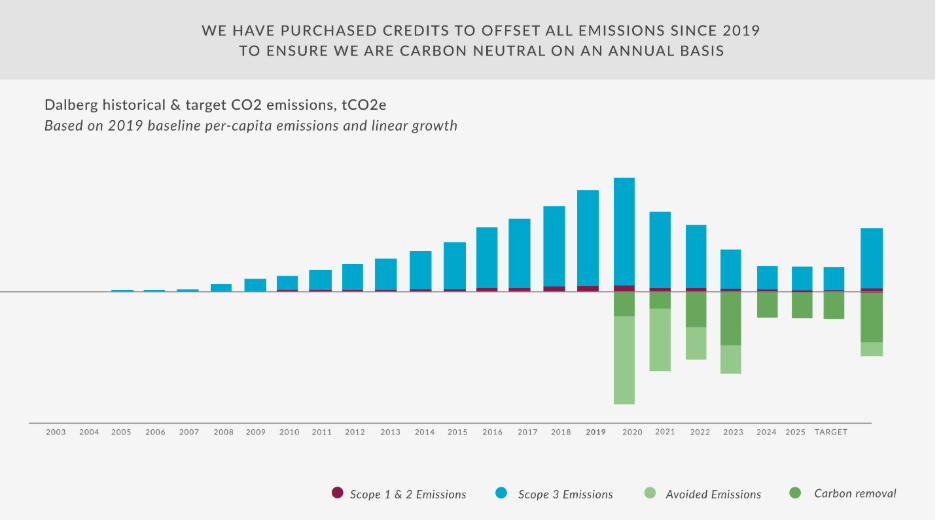
Our total emission for the year stands at 3,393t, up 7.8% compared to the previous year, most likely owing to increased activity firm-wide. Of our total emissions, 97.6% is scope 3, which refers to life cycle emission, arising from ‘purchased goods and services’ (55% of scope 3), followed by business travel (34%).
Compensating for unavoidable emissions
Dalberg mitigates the amount of the unavoidable CO2 we emit by purchasing offsets through our ongoing partner Klimate, a verifiable, science-based carbon removal solution provider. The projects that we have invested in to offset our 2025 emissions are nature-based solutions such as the Vichada Climate Reforestation program in Colombia. Spread over 106,000 hectares of land that was once degraded grassland, the conservation program mitigates greenhouse gases, creates rural jobs, improves soil health and protects biodiversity through reforestation and sustainable land management.
Recovering plastic waste from the environment
To scale down our plastic footprint, Dalberg partners with rePurpose Global, experts in traceability and verification protocols for plastic recovery. With their guidance, we determined a standard measure of plastic generation of 15kg per employee per year, taking into account the size, profile, and service-based model of Dalberg. The benchmark helped us overcome the challenge of manually determining the amount of plastic generated across our offices.
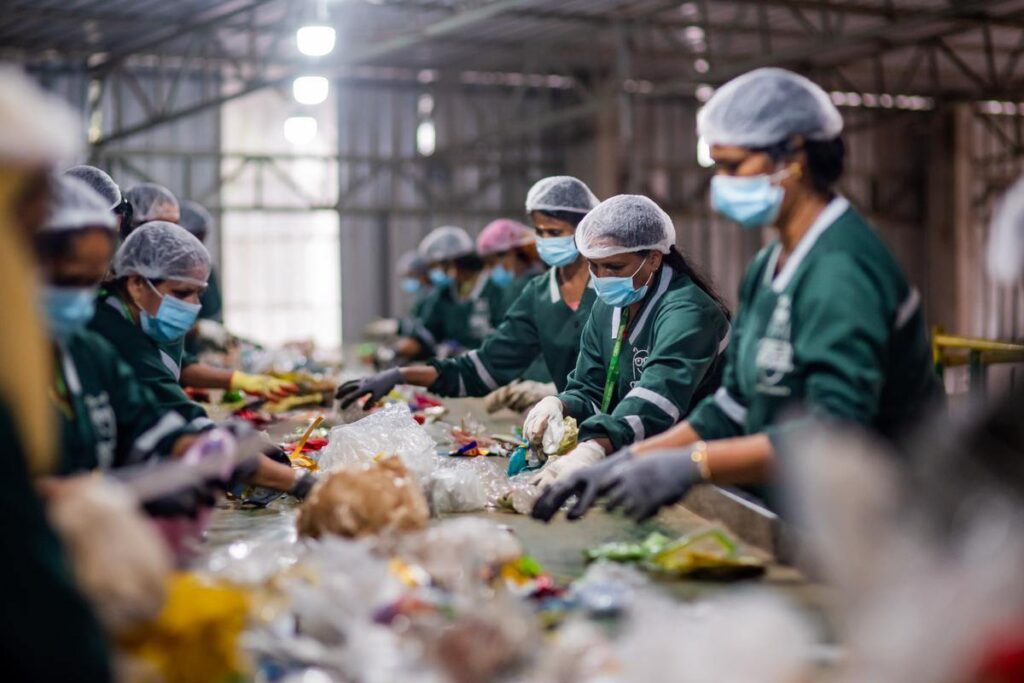
Working with RePurpose to offset our plastics usage, we fund the ethical collection, sorting, and recovery of plastic waste from the environment. In 2025, 7,273 kg of plastic was collected through two projects:
- Project Hara Kal: 1365 workers were supported by this initiative that focuses on women’s empowerment in Kerala, India (pictured above). Workers receive salaries that are 48% higher than the state’s minimum wage, and over 700,000 people benefit from better waste collection.
- Project Nuevo Ciclo: This project in Medellín, Colombia turns trash into community amenities. The organization has created 49 playgrounds using recycled plastic, supporting 48 workers in the process.
Our core objectives are maintaining a 55% decrease in GHG emissions from the firm’s 2019 baseline, cutting down our per-person plastic footprint, and advising our clients to mitigate and adapt to climate change. Every year, we try to improve our performance and help those we serve to reach net-zero.
Having met our 2025 goals, we’re working on setting our targets for 2026 and thinking about the kind of responsible action we want to engage in going ahead. We welcome your ideas as we shape our plans in the coming months.