



Dalberg uses cookies and related technologies to improve the way the site functions. A cookie is a text file that is stored on your device. We use these text files for functionality such as to analyze our traffic or to personalize content. You can easily control how we use cookies on your device by adjusting the settings below, and you may also change those settings at any time by visiting our privacy policy page.
Building for longer lives begins with changing the story we tell about aging. A narrative centered on decline, dependency, and care calls for a shift towards one that recognizes agency, aspiration, and continued contribution. While there may be abundant ideas, data, and people working on longer lives, these remain to be connected and understood in a way that makes the field visible, coherent, and fundable. Existing evidence is rarely analyzed through an India-specific longevity lens.
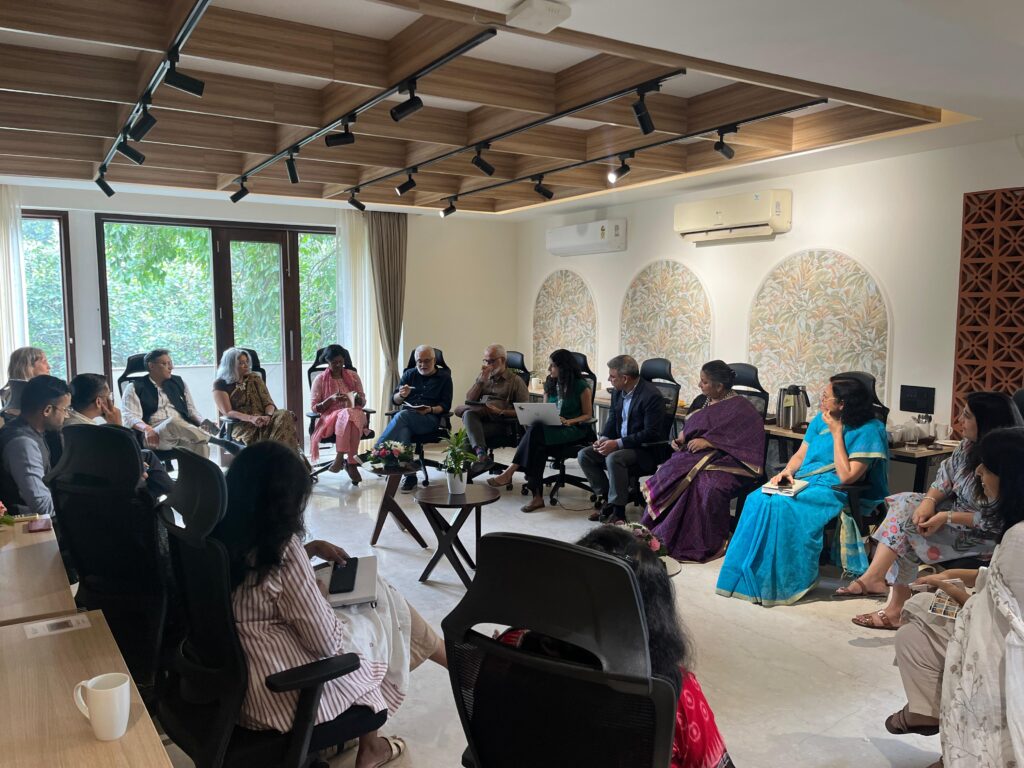
On the sidelines of AVPN 2026, Dalberg hosted a learning circle in Delhi with practitioners, funders, researchers, entrepreneurs, and policy and legal experts. It was the first in a series of conversations for the Longevity Stitch, a shared field-building initiative to reshape how India understands and builds for longer lives. The conversation ranged from personal aspects to the systemic: purpose and social connection, financial security, healthspan and cognitive health, caregiving, rights and dignity, and the roles of policy and capital.
Five takeaways stood out from the conversation:
- Longer lives concern everybody. Treating ageing as a narrow “elderly” issue misses its intergenerational nature and the need to redesign society and its institutions for longer lives.
- There is no single India. Older adults cannot be treated as one segment. Responses require attention to differences in geography, age, gender, class, caste, and lived experience, asking not only what works, but for whom and under what conditions.
- The field may not need more data first. Bringing together existing evidence, interpreting it through an India lens, and making the landscape legible can help understand who is doing what, where capital flows, and which people and issues remain overlooked.
- We need to fund problems, not only proven solutions. Capital is also needed for discovery, research, and experimentation before an intervention is fully formed or ready to scale.
- Policy relevance works best when built in from the outset. Strong narratives, grounded in quantitative evidence and lived experience, can create the credibility needed to engage government and shape longer-term action.
These insights will inform the Stitch’s Year 1 agenda across data and narrative, ecosystem building, and crowding in new funders. We will continue shaping this work with those already leading the field, connecting perspectives, evidence, ideas, and capital.