




Dalberg uses cookies and related technologies to improve the way the site functions. A cookie is a text file that is stored on your device. We use these text files for functionality such as to analyze our traffic or to personalize content. You can easily control how we use cookies on your device by adjusting the settings below, and you may also change those settings at any time by visiting our privacy policy page.

There is an urgent need to shift from managing aging to optimizing longevity, living healthier, more fulfilling, and economically stable lives, and to ensure this transformation is equitable, not just for the privileged few. While life expectancy, or lifespan, has continued to increase over recent years, healthspan (the number of years a person has lived a healthy, active, disease-free life) has not increased to the same degree. According to Mayo Clinic, the average global gap between lifespan and healthspan was 9.6 years in 2019, a 13% increase since 2000. The challenge we face is not how to extend life but how to extend good life.
Longevity is fundamentally a systems challenge. Living a long, meaningful life requires economic security, social connectedness, meaningful participation in civic and community life, and a sense of well-being. These outcomes are all shaped by deeper systems: the structure of our economies, the quality of learning and skills development, the ability to access quality healthcare and caregiving, the robustness of physical and digital infrastructure, the strength of our social safety nets, and the ways in which aging shows up in our cultures. Underpinning all of these are narratives and beliefs that shape how societies value older individuals.
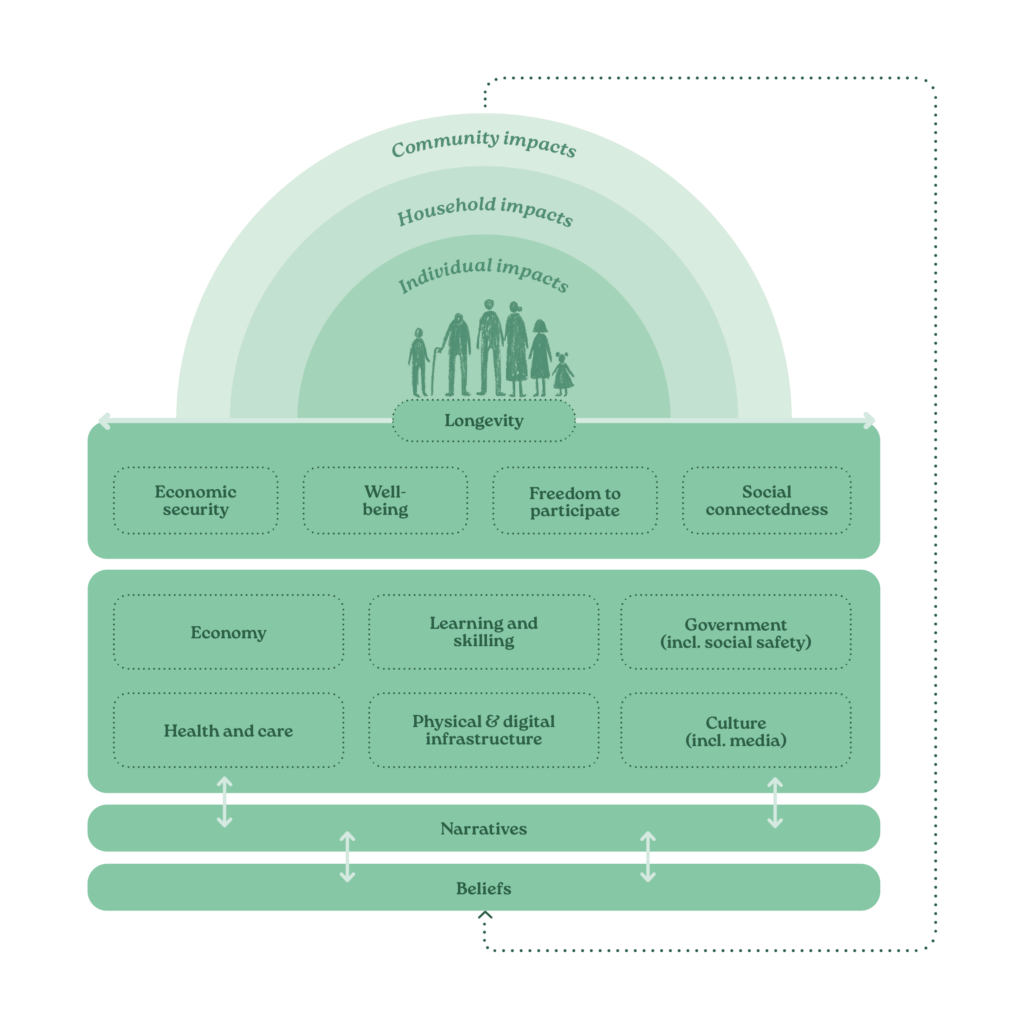
Dalberg’s Global Longevity Insights Series is engaging leading thinkers and practitioners from across the globe to build a nuanced, actionable perspective on longevity and how to embed it into diverse societies. The series will ask key questions of how our societies are organized and function and highlight several critical levers for advancing longevity:
- Narratives and beliefs are foundational and shape everything: who receives care, who remains visible, and whose potential goes untapped. Across countries and cultures as different as India, Brazil, and the US, dominant narratives still cast older adults as burdens rather than assets. Shifting these stories is foundational to shifting everything else. Where do these narratives come from, how are changemakers successfully shifting them, and what would it take to build a genuine culture of longevity?
- Health and care systems remain oriented around treating disease rather than preserving health, with care workforces underpaid and under-resourced. From preventive interventions in midlife to elder care models that support aging with dignity, the gap between what is possible and what is delivered is wide and unequally distributed. What do healthcare and caregiving systems need to do differently, and what innovations and models offer real lessons for getting this right?
- The economy and the learning and skilling systems that underpin it require fundamental rethinking of how and when people learn and work. Many low- and middle-income older adults face financial instability, compounded by pension systems designed for a demographic era that no longer exists. What provisions, policies, and innovations are needed to ensure that longer lives are financially stable, enabled by lifelong learning and reskilling that keeps people contributing and connected across the full arc of life?
- Physical and digital infrastructure is key to enabling healthy aging. From age-inclusive housing and accessible public spaces to AI-powered health tools and assistive technologies, a new generation of innovation holds real promise, but access remains deeply unequal across income, geography, and digital literacy. What would it take to design infrastructure that actively supports independence, connection, and participation for aging populations, and how can impact investment and philanthropy help ensure these innovations reach those who need them the most?
Throughout the series, hear from experts who are redesigning care within communities, experimenting with new models of productive aging, and developing evidence on how to extend and improve the quality of life for all. These conversations are grounded in evidence but oriented toward practice, offering insight and concrete direction for funders, investors, innovators, and anyone reimagining what it means to live longer.
Discover what a genuine culture of longevity could look like, and what it takes to build out.
-
What Entrepreneurs Are Building for Longer, Healthier Lives
Hear from Village Capital’s Martin Alexis and Cali Simmons
Read More
The Longevity Stitch: An India-Specific Lens
The Longevity Stitch is a new initiative by Dalberg that seeks to deepen the conversation around ageing in India.
The initiative follows the release of a report on longevity in partnership with Rohini Nilekani Philanthropies and Ashoka.
REPORT
Longevity: A New Way of Understanding Ageing
The report shows how older adults contribute actively to society as workers, caregivers, and grassroots leaders while facing poverty, isolation, and limited access to care and livelihoods. Beyond these challenges, entrenched perceptions of ageing can prevent them from reaching their full potential.
Read more →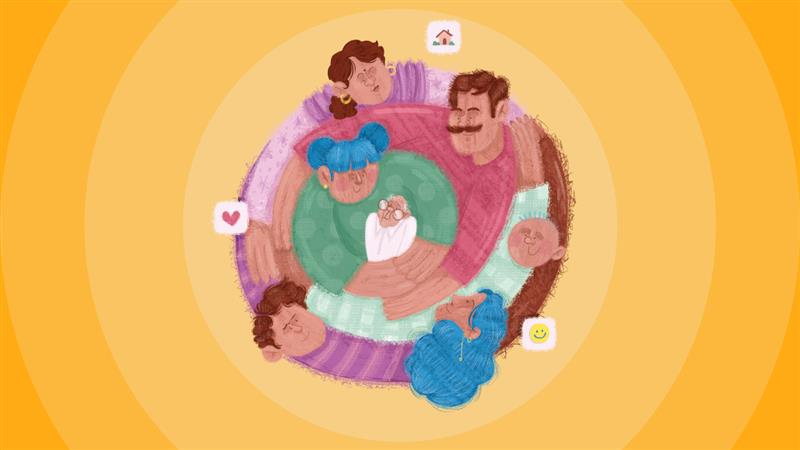
LEARNING CIRCLE
Reshaping How India Understands and Builds for Longer Lives
On the sidelines of AVPN 2026, Dalberg hosted a learning circle in Delhi with practitioners, funders, researchers, entrepreneurs, and policy and legal experts. It was the first in a series of conversations for the Longevity Stitch
Read more →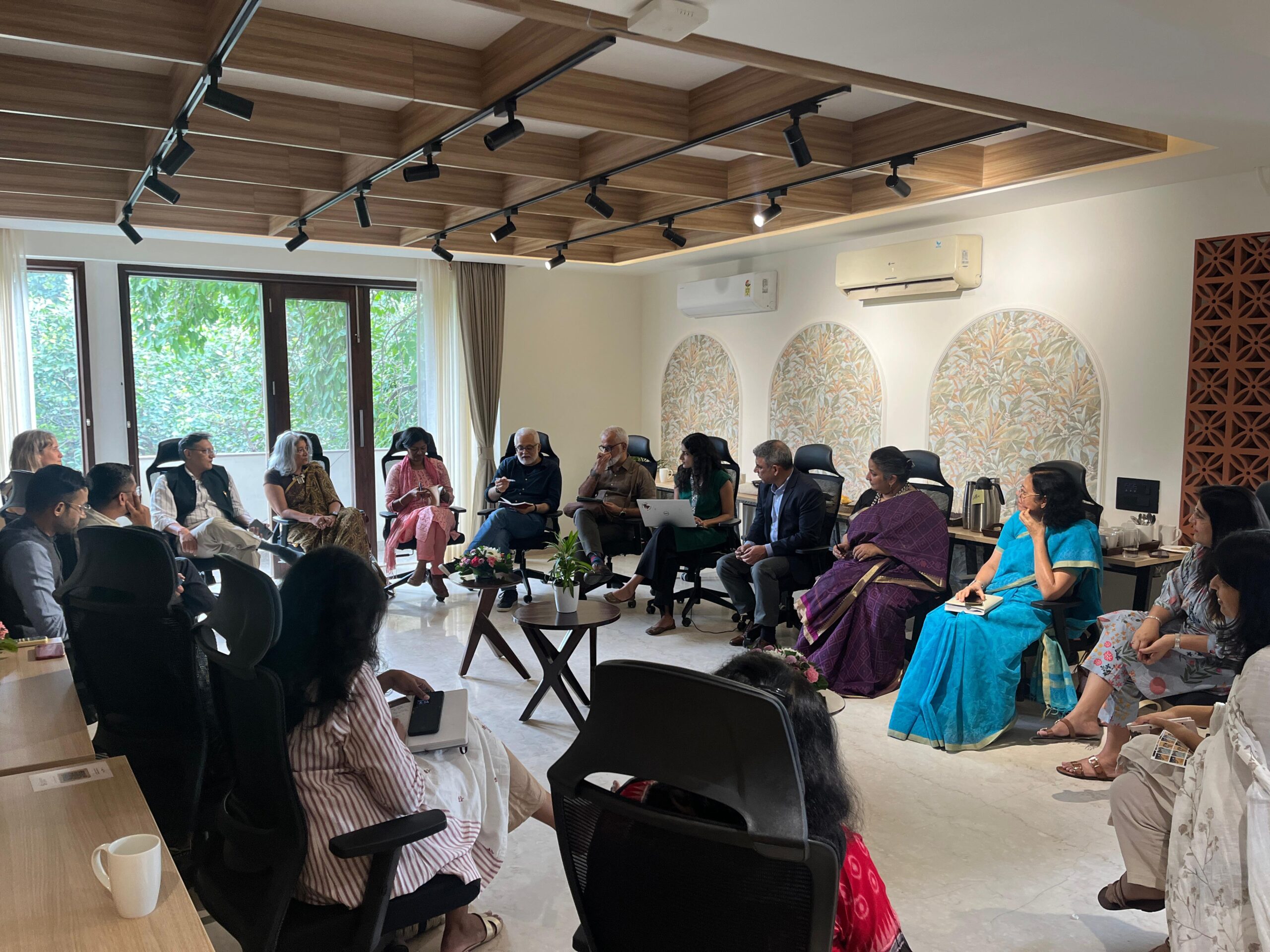
RACHNA SAXENA
Partner Emerita and Senior Advisor, Dalberg Advisors
DANIELLE SWEENEY
Associate Partner, Dalberg Advisors